

Prostate Cancer Drugs Market to Reach US$ 28.10 Billion by 2033 at 8.1% CAGR; North America Leads with 41% Share
Prostate Cancer Drugs
Prostate Cancer Drugs Market to Reach US$ 28.10 Billion by 2033 at 8.1% CAGR; North America Leads with 41% Share
The prostate cancer drug market is growing steadily as demand rises with increasing disease prevalence and advances in innovative therapies worldwide.”
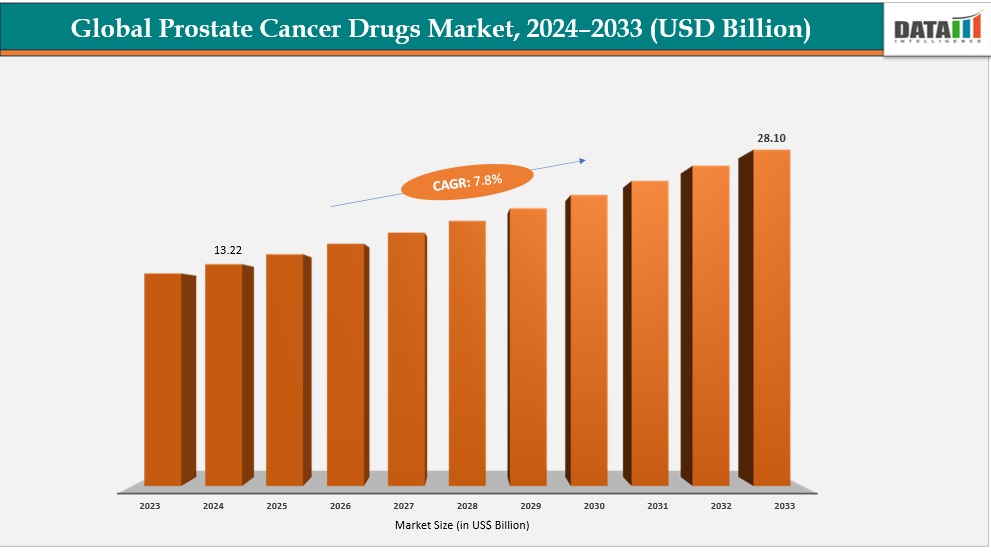
LEANDER, TX, UNITED STATES, February 27, 2026 /EINPresswire.com/ -- The Prostate Cancer Drugs Market was valued at US$ 13.22 billion in 2024 and is projected to reach US$ 28.10 billion by 2033, growing at a CAGR of 8.1 percent during the forecast period 2025 to 2033. Market growth is primarily driven by the rising global incidence of prostate cancer, largely attributed to the rapidly expanding aging male population. Prostate cancer is strongly age associated, with risk increasing significantly after 50 years and peaking among men over 70, leading to a steadily growing patient base worldwide.— DataM Intelligence
Improved awareness, higher prostate specific antigen screening rates, and broader adoption of advanced diagnostic technologies are contributing to earlier and more frequent detection. According to the World Health Organization, cancer remains one of the leading causes of mortality globally, reinforcing the need for effective treatment strategies. The expanding patient pool is driving sustained demand for hormonal therapies, androgen receptor targeted agents, PARP inhibitors, radioligand therapies, and chemotherapy, strengthening the long term growth outlook of the global prostate cancer drugs market.
Download your exclusive sample report today: (corporate email gets priority access): https://www.datamintelligence.com/download-sample/prostate-cancer-drugs-market
Key Developments
February 2026: In the United States and Europe, Food and Drug Administration and European Medicines Agency jointly issued updated clinical guidance supporting earlier use of next-generation androgen receptor inhibitors (ARIs) in high-risk non-metastatic prostate cancer, prompting major biopharma companies to accelerate late-stage trial programs for expanded indications.
January 2026: In global oncology markets, Pfizer announced positive Phase III trial results for its investigational combination therapy pairing an ARI with an immunotherapy agent, showing improved metastasis-free survival in patients with high-risk localized prostate cancer, and outlined plans for regulatory submissions across major regions.
December 2025: In North America, Astellas Pharma expanded its PROSECAR and XTANDI label discussions with health authorities to explore broader patient access and earlier therapeutic use in advanced prostate cancer, and strengthened real-world evidence programs to support reimbursement negotiations.
November 2025: In Europe and Asia Pacific, AstraZeneca reported interim results from its Phase II prostate cancer drug candidate targeting DNA damage response pathways, and entered strategic collaborations with regional cancer research centers to accelerate clinical development and biomarker identification.
October 2025: In the United States, Johnson & Johnson via its oncology arm announced initiation of a global Phase III trial for its next-generation hormone therapy designed to overcome resistance mechanisms in castration-resistant prostate cancer, with sites across North America and Europe.
September 2025: In global oncology markets, Bayer expanded access programs for its prostate cancer drug portfolio, including targeted therapies and hormonal agents, and rolled out new patient support initiatives to improve adherence and quality-of-life outcomes.
Key Segments
By Therapy Type
Hormonal therapy is widely used for hormone sensitive cancers such as breast and prostate cancer, aiming to block or reduce hormone production that fuels tumor growth. Chemotherapy remains a foundational treatment option, utilizing cytotoxic drugs to destroy rapidly dividing cancer cells. Immunotherapy is a rapidly expanding segment, leveraging the body’s immune system to identify and eliminate cancer cells more effectively. Targeted therapy focuses on specific molecular targets associated with cancer progression, offering improved precision and reduced damage to healthy tissues.
By Route of Administration
Oral administration is gaining popularity due to patient convenience, improved compliance, and the growing availability of targeted oral therapies. Intravenous administration remains dominant, particularly for chemotherapy and certain immunotherapies that require controlled dosing in clinical settings. Other routes include subcutaneous and intramuscular injections used for specific biologics and supportive treatments.
By Distribution Channel
Hospital pharmacies account for the largest share due to the administration of complex oncology treatments within hospital settings. Retail pharmacies support the distribution of oral anticancer drugs and supportive care medications. Online pharmacies are witnessing gradual growth, driven by increasing digital adoption and demand for convenient medication access, particularly for long term cancer therapies.
Buy Now & Unlock 360° Market Intelligence: https://www.datamintelligence.com/buy-now-page?report=prostate-cancer-drugs-market
Key Players
Astellas Pharma Inc. | Pfizer Inc. | Johnson & Johnson | Bayer | Novartis | AstraZeneca | Sanofi | PharmaMar | Merck & Co., Inc. | Ferring Pharmaceuticals | Others
Regional Insights
North America – 41% share: “Driven by high prostate cancer prevalence, advanced healthcare infrastructure, strong research ecosystem, and early adoption of novel therapeutics in the United States and Canada.”
Europe – 27% share: “Supported by established oncology care networks, rigorous screening programs, and reimbursement support for new prostate cancer drugs across major European countries.”
Asia Pacific – 25% share: “Fueled by growing awareness, rising disease burden in China, India, Japan, and Southeast Asia, and expanding oncology treatment access.”
Latin America – 4% share: “Boosted by increased screening initiatives, expanding cancer care infrastructure, and gradual adoption of advanced therapies.”
Middle East & Africa – 3% share: “Driven by healthcare development efforts, increasing oncology services, and rising investments in cancer treatment capabilities.”
Get Customization in the report as per your requirements: https://www.datamintelligence.com/customize/prostate-cancer-drugs-market
Frequently Asked Questions (FAQs):
How big is the global prostate cancer drugs market in terms of growth forecast?
The global prostate cancer drugs market was valued at approximately US$ 13.22 billion in 2024 and is expected to reach around US$ 28.10 billion by 2033, reflecting strong growth over the forecast period.
What is the projected CAGR for the prostate cancer drugs market?
The market is projected to grow at a compound annual growth rate of about 8.1% during the forecast period from 2025 to 2033.
Which region currently dominates the prostate cancer drugs market?
North America dominates the prostate cancer drugs market due to high disease prevalence, advanced healthcare infrastructure, and strong adoption of innovative treatment therapies.
Which region is expected to grow the fastest in this market?
The Asia-Pacific region is expected to witness the fastest growth, supported by rising prostate cancer incidence, improving healthcare access, and increasing awareness and early diagnosis initiatives.
Which therapy type holds the largest share in the prostate cancer drugs market?
Hormonal therapy holds the largest share in the market, as it remains a primary treatment approach across different stages of prostate cancer.
Conclusion:
The global prostate cancer drugs market is expected to grow substantially through 2033, nearly doubling in value as increasing incidence of prostate cancer among aging male populations and higher detection rates drive demand for both traditional therapies and next-generation treatments. Adoption of advanced hormonal therapies, targeted agents, immunotherapies, and oral drugs is reshaping treatment practices and improving patient outcomes. While treatment costs and access remain considerations, continued innovation, expanded screening, and broader therapy adoption are anticipated to support long-term market expansion, positioning prostate cancer drugs as a central pillar of oncology care worldwide.
Related Reports:
1. Prostate Cancer Treatment Market
2. Prostate Cancer Imaging Market
Sai Kiran
DataM Intelligence 4market Research LLP
+1 877-441-4866
email us here
Visit us on social media:
LinkedIn
YouTube
X
Legal Disclaimer:
EIN Presswire provides this news content "as is" without warranty of any kind. We do not accept any responsibility or liability for the accuracy, content, images, videos, licenses, completeness, legality, or reliability of the information contained in this article. If you have any complaints or copyright issues related to this article, kindly contact the author above.
