

Plant-Based Food & Beverages Market to Reach US$ 48.25B by 2031, led by Asia Pacific's 35.84 Market share
Rising health consciousness, sustainability trends, and innovative plant-based products drive strong growth across global food and beverage sectors.
The market’s rapid expansion reflects consumer shifts toward healthier, eco-friendly diets. Companies investing in R&D and diverse plant-based options are poised to capture long-term demand.”
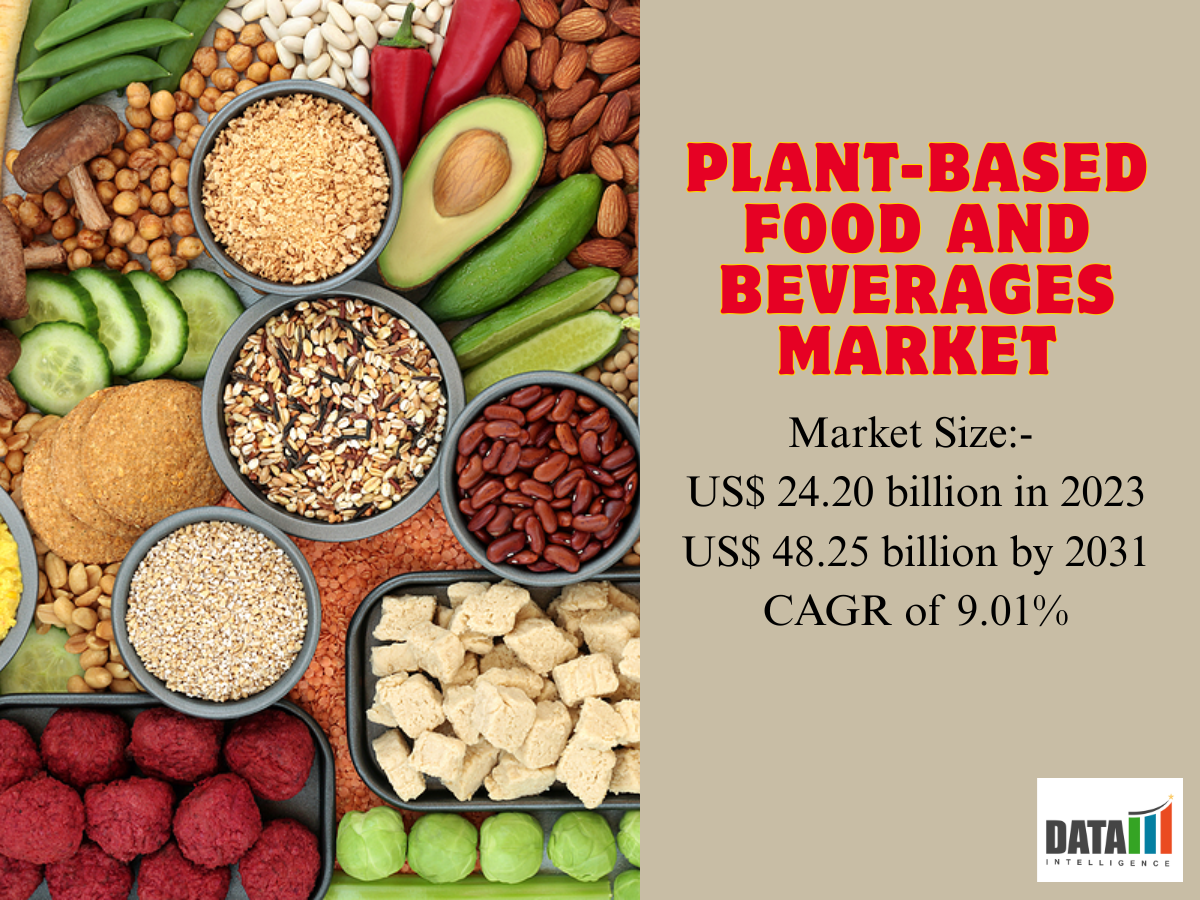
AUSTIN, TX, UNITED STATES, February 27, 2026 /EINPresswire.com/ -- The Plant-Based Food And Beverages Market reached US$ 24.20 billion in 2023 and is expected to reach US$ 48.25 billion by 2031, growing with a CAGR of 9.01% during the forecast period 2024-2031.— DataM Intelligence
The market’s growth is driven by rising U.S. demand for healthier, sustainable alternatives and major activities like strategic acquisitions and product innovations, while in Japan expanded retail offerings and government‑backed R&D partnerships accelerate plant‑based food & beverage adoption and market penetration.
Download your exclusive sample report today: (corporate email gets priority access):https://www.datamintelligence.com/download-sample/plant-based-food-and-beverages?prtk
Key Industry Development-
United States: Key Industry Developments (Plant‑Based Food & Beverages Market)
• December 2025: PepsiCo and Oatly expanded their joint‑venture plant‑based dairy and RTD beverage range into Walmart and Target’s refrigerated sections, emphasizing shelf‑stable, high‑protein oat‑based drinks aimed at health‑conscious suburban consumers.
• November 2025: Silk launched its new Silk Protein plant‑based dairy line with 50% more protein, added fiber, and reduced sugar, targeting gym‑goers and flexitarians through dedicated fitness‑retail tie‑ups and social‑media‑driven campaigns.
• October 2025: Danone North America completed its acquisition of Kate Farms, integrating its plant‑based nutritional shakes into Danone’s clinical and specialty‑nutrition portfolio and rolling them out via U.S. hospital and home‑care channels.
• September 2025: T. Hasegawa USA introduced PLANTREACT, a flavor‑technology platform that replicates dairy‑like and savory notes in plant‑based beverages, enabling several U.S. startups to refresh their RTD milk and broth lines with more “real‑dairy” taste profiles.
• August 2025: Nestlé rolled out a nationwide expansion of plant‑based frozen ready meals under its Sweet Earth and Garden Gourmet banners, broadening availability in major grocery chains and increasing freezer‑space share by 15% year‑on‑year.
• July 2025: Beyond Meat partnered with a major QSR chain to launch a new plant‑based chicken‑style burger in over 2,000 U.S. locations, combining pea‑ and soy‑based proteins with a proprietary marinade to improve juiciness and reduce off‑notes.
United States: Recent Product Launches 2025 (Plant‑Based Food & Beverages)
• December 2025: Yo Egg launched a new liquid egg yolk analog in New York‑area grocery stores, complementing its existing vegan egg patties and expanding into the breakfast‑baking and pre‑made breakfast‑sandwich segments.
• November 2025: Oatly introduced an oat‑based protein‑shake variant with added collagen‑like peptides and BCAAs, positioned for recovery‑drink positioning in gyms and sports‑nutrition retailers.
• October 2025: Plant‑based snack brand Enjoy Life launched a new line of grain‑free, high‑protein plant‑based bars with pea protein and seed‑based fats, targeting parents and allergy‑conscious consumers via Costco and Safeway.
• September 2025: Impossible Foods launched a plant‑based ground‑meat product tailored for Hispanic‑style formats ( taco and empanada fillings), listing it in Walmart and Kroger supercenters with bilingual packaging and in‑store demos.
• August 2025: Califia Farms refreshed its plant‑based creamer portfolio with a “Blend‑with‑Dairy” line combining oat and organic milk, targeting hybrid consumers who want reduced‑dairy but not fully vegan options.
Asia Pacific / Japan: Key Industry Developments (Plant‑Based Food & Beverages Market)
• December 2025: Japanese food‑tech startups and domestic dairy incumbents deepened partnerships to co‑develop soy‑ and fermented‑plant‑based yogurts fortified with probiotics, leveraging Japan’s long‑standing soy‑drink culture and aging‑population health focus.
• November 2025: Japanese manufacturers expanded functional plant‑based bars enriched with vitamins, minerals, and fiber into convenience‑store chains such as 7‑Eleven and Lawson, aligning with commuter‑snacking habits and wellness‑driven purchasing.
• October 2025: Major retailers including FamilyMart and 7‑Eleven increased shelf space for organic and fortified plant‑based bars and ready‑to‑eat plant‑based meals, especially in Tokyo and Osaka urban‑mobility hubs.
• September 2025: Japanese brands adopted smaller‑portion, recyclable packaging for plant‑based bars and drinks, responding to government‑level sustainability targets and consumer demands for eco‑friendly formats in urban centers.
• August 2025: Local soy‑based drink producers partnered with health‑conscious retailers to promote fortified soy beverages and rice‑milk drinks in supermarkets and drugstores, emphasizing low‑calorie, bone‑health, and gut‑health claims.
Asia Pacific / Japan: Recent Product Launches 2025 (Plant‑Based Food & Beverages)
• December 2025: Mitsubishi‑sponsored food tech startups launched a soy‑based “K‑style” fermented drink bar combining plant‑based protein and prebiotics, targeting post‑lunch snack occasions in office districts.
• November 2025: A leading Japanese beverage company introduced a rice‑milk‑based RTD beverage with added calcium and vitamin D, positioned as a traditional‑style “mizu‑mochi” companion drink for tea‑and‑snack consumption.
• October 2025: Convenience‑store giant 7‑Eleven Japan rolled out a series of plant‑based bento boxes featuring soy‑based “tori”‑style proteins and tofu‑based desserts, aimed at weekday office workers and health‑conscious shoppers.
• September 2025: A Japanese plant‑based snack brand launched portion‑controlled, seaweed‑encrusted plant‑based bars in Lawson stores, combining umami‑rich sea‑vegetable coatings with pea‑protein cores for on‑the‑go snacking.
• August 2025: A tofu and soy‑milk producer introduced a new chilled, low‑sugar soy drink line with added fiber and plant‑based collagen peptides, marketed through drugstores and vending machines in Tokyo and Osaka.
Steategic M&A-
In May 2025, Danone completed the acquisition of a majority stake in Kate Farms, a U.S.-based company known for its plant‑based organic nutritional formulas and shakes. This strategic move was intended to bolster Danone’s specialized nutrition portfolio in North America by incorporating a leading plant‑based nutrition brand into its offerings, expanding access to health‑focused products across consumer and medical channels.
In August 2025, v2food, in partnership with Ajinomoto Co., acquired Daring Foods, a U.S. plant‑based chicken brand, to support its expansion into the U.S. market. The acquisition was positioned to leverage Ajinomoto’s global network and technology expertise, enabling the combined entity to scale plant‑based protein solutions and strengthen its presence across international markets.
In August 2025, Bunge Global signed an agreement to acquire selected plant‑based ingredients assets from International Flavors & Fragrances (IFF), including soy protein concentrate, lecithin, and related businesses. This transaction was structured to enhance Bunge’s footprint in plant‑based ingredients by integrating complementary operations that support food, feed, and biofuel sectors, improving vertical integration and product capabilities.
In November 2025, ETİ Gıda Sanayi ve Ticaret A.Ş. agreed to acquire TRUBAR Inc., a Canadian plant‑based protein snacks producer, in a deal valued at approximately C$201 million. This acquisition aimed to expand ETİ Gıda’s consumer offerings by incorporating TRUBAR’s plant‑based snack portfolio, broadening its presence in natural and plant‑based foods.
Also in November 2025, Nexture signed an agreement to acquire Frulact, a Portugal‑based manufacturer of fruit‑based specialty and plant‑based ingredients sold worldwide. The deal was intended to strengthen Nexture’s global ingredient solutions business and expand its reach into diverse food and beverage applications through Frulact’s established product lines and international footprint.
Major Players:-
Intercept Pharmaceuticals | Gilead Sciences | Ipsen Biopharmaceuticals | Teva Pharmaceuticals USA | Glenmark Pharmaceuticals | AbbVie | Aden Healthcare | Zydus Therapeutics | COUR Pharmaceuticals | Kowa Company | Mirum Pharma | Parvus Therapeutics | GSK | Strides Pharma Science | Calliditas Therapeutics
AbbVie – A global biopharmaceutical company with negligible share in plant‑based foods; its ranking in health markets and wellness diversification may provide branding leverage, but it does not hold measurable share in the plant‑based food & beverage market compared to core food companies that capture single‑digit to double‑digit global shares.
GSK (GlaxoSmithKline) – A major healthcare firm linked in some plant‑based nutrition product research, but doesn’t feature among top plant‑based food/beverage market share leaders ( companies with 16% share). Its strength comes from nutrition science and wellness pipelines, which support functional plant‑based products rather than overall food market dominance.
Zydus Therapeutics – As part of Zydus Lifesciences (pharma), it holds no significant plant‑based food market share. If included in niche plant‑based nutritional supplements or speciality formulations, such segments are still a very small component of the broader market, where independent food brands hold more influence.
Calliditas Therapeutics – A pharma company focused on rare diseases; not a food & beverages competitor. Any reference to plant‑based products would be in physician‑led nutrition science rather than typical consumer retail, so its actual consumer market share in food/beverages is essentially zero despite biotech expertise.
Kowa Company – A Japanese diversified manufacturer with interests in pharmaceuticals and chemicals. In plant‑based foods, it has limited to no measurable market share. Its position would be based on ingredient production or materials science, not direct consumer beverage market leadership.
"Secure your 30% discount - get this report before the offer expires."
:https://www.datamintelligence.com/buy-now-page?report=plant-based-food-and-beverages?prtk (Purchase 2 or more Repots and get 50% Discount)
Market Segmenatation-
1. Product Type Segmentation (US & Japan)
In the United States, the plant‑based market is commonly segmented by product type into categories such as plant‑based dairy (milk, yogurt, cheese), meat substitutes, snacks and bakery items, juices, and ready‑to‑drink (RTD) beverages, with plant‑based dairy and meat alternatives driving much of the growth based on consumer demand for healthier and sustainable options. In Japan, similar product type segmentation exists with plant‑based milk and derivatives dominating in value and showing strong projected growth through the decade, while emerging segments like plant‑based yogurt are rapidly expanding as consumer interest in dairy alternatives increases.
2. Ingredient Source Segmentation (US & Japan)
For ingredient sources in the US plant‑based beverages segment, soy has traditionally been the largest segment by revenue, but almond and oat sources are among the fastest growing due to shifting taste preferences and perceived health benefits. In Japan, soy remains a dominant ingredient source for both plant‑based beverages and foods, reflecting cultural familiarity with soy products, but almond‑based offerings are expected to register the highest growth rates over the coming years.
3. Distribution Channel Segmentation (US & Japan)
Distribution channels in the United States for plant‑based food and beverage products are segmented into traditional retail (supermarkets/hypermarkets), convenience stores, specialty shops, and online platforms, with supermarkets and online retail capturing the largest shares due to wide product availability and growing e‑commerce penetration. In Japan, plant‑based RTD and food products are distributed through modern trade outlets like supermarkets and convenience stores as well as online platforms, with a substantial portion of market value coming from these organized channels as urban consumers adopt plant‑based lifestyles.
4. Category/Format Segmentation (US & Japan)
Format or category segmentation in the US plant‑based beverage market often distinguishes between non‑dairy milk alternatives, RTD functional beverages, and fortified drinks, with the non‑dairy milk segment forming a key share of market value. In Japan, segment categories include plant‑milks (soy, almond, oat), functional health drinks and fortified waters, with a focus on products tailored for health, wellness, and convenience reflecting urban lifestyle trends.
Market Drivers:-
• Growing Consumer Health Consciousness: Increasing awareness of the health benefits associated with plant‑based eating such as improved heart health, lower cholesterol, and reduced risk of chronic diseases is pushing more consumers to choose plant‑based foods and beverages over traditional animal‑based options.
• Rise in Flexitarian and Alternative Diet Adoption: A significant portion of the U.S. population is adopting flexitarian, vegetarian, or reduced‑meat diets, driving demand for diverse plant‑based alternatives across food and drink categories.
• Influence of Digital Marketing and Social Platforms: Social media influencers, health advocates, and digital campaigns are elevating awareness and desirability of plant‑based options among younger and mainstream consumers, boosting overall market engagement.
• Expanded Retail and Product Innovation: U.S. food companies are increasingly investing in plant‑based product lines including dairy alternatives, meat substitutes, snacks, and beverages supported by advanced food technologies that enhance taste and nutrition.
• Sustainability and Ethical Consumption Trends: Environmental concerns around traditional animal agriculture, such as carbon footprint and resource intensity, are influencing purchasing behavior toward plant‑based alternatives perceived as more sustainable.
Regional insights:-
1) Asia Pacific: 35.84% (Largest share of global plant‑based food & beverages revenue driven by population scale, rising health consciousness, and growth in China, Japan, India, etc.)
• Japan (country level): 9.1% of global plant‑based beverages market (2021) indicating a significant role within Asia Pacific’s share.
2) North America: 29.9% (second‑largest regional share in plant‑based beverages, supported by high consumer awareness and dairy alternative adoption note this is beverage specific but aligns with broader F&B market trends)
• United States: 10.7% of the global plant‑based beverages market (2021). This positions the US as the clear leader within North America.
3) Europe: 30% (varies across reports Europe often lands between North America and Asia Pacific in share, supported by strong flexitarian/vegan trends)
Get Customization in the report as per your requirements:https://www.datamintelligence.com/customize/plant-based-food-and-beverages?prtk
Conclusion:
The plant-based food and beverage market is set for significant growth, fueled by increasing consumer awareness of health and environmental benefits. Innovation in products, flavors, and accessibility will further accelerate adoption globally. Companies that focus on quality, sustainability, and marketing strategies aligned with consumer values will gain a competitive advantage in this expanding market.
Related Reports:-
1. Plant-Based Meat Market
2. Plant-based Probiotics Market
Sai Kumar
DataM Intelligence 4market Research LLP
+1 877-441-4866
email us here
Visit us on social media:
LinkedIn
X
Legal Disclaimer:
EIN Presswire provides this news content "as is" without warranty of any kind. We do not accept any responsibility or liability for the accuracy, content, images, videos, licenses, completeness, legality, or reliability of the information contained in this article. If you have any complaints or copyright issues related to this article, kindly contact the author above.
